Windows has many network services too and you might already be knowing that it can become a router or a VPN Server too. Let us see how to use the Windows server 2012 as a router by installing the Remote Access role to it.
PS − Server should have 2 network cards – One inside the LAN and the other facing the internet.
To add the Remote Access role, we should follow the steps given below.
Step 1 − Go to, Server Manager → Manage → Add Roles and Features → Next → Check Role-based or feature-based installation → Check Select a server from the server pool → Next.
Once all of it is done, then at the list of the roles find Remote Access and check it → A pop-up window will open.
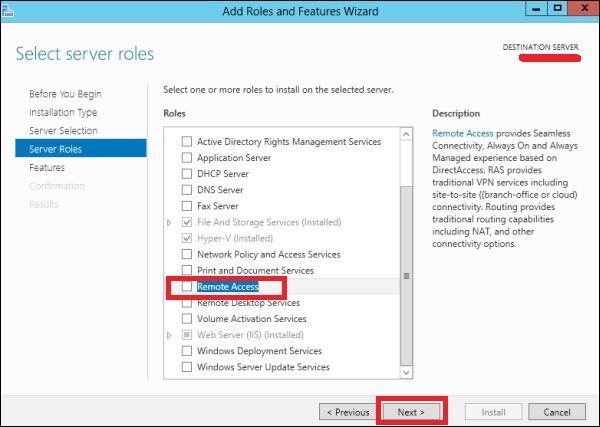
Remote Access
Step 2 − Click “Add Features” → Next.
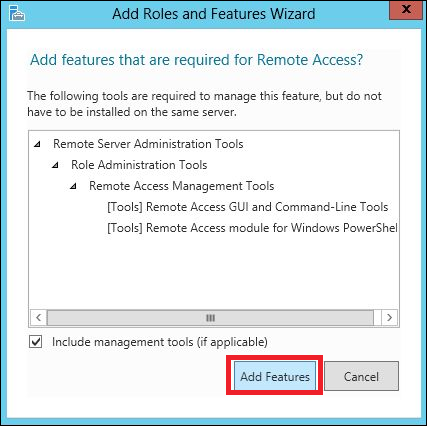
Remote Access Features
Step 3 − Click Next.
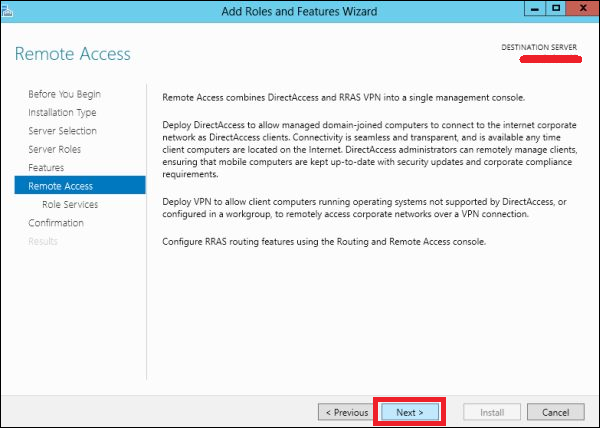
Remote Access Combines
Step 4 − Check on the DirectAccess and VPN(RAS) and Routing check boxes.
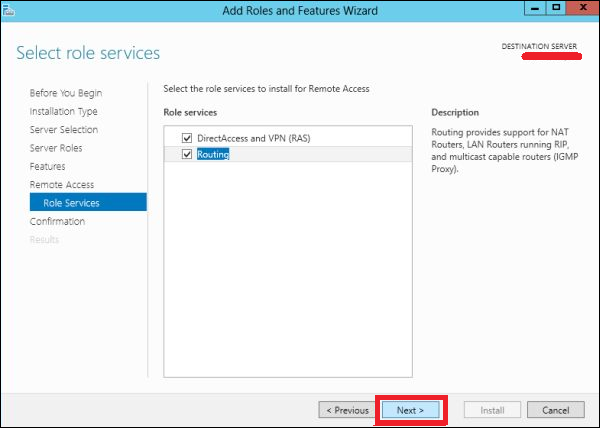
RAS
Step 5 − Click Install and wait for it to be installed completely.
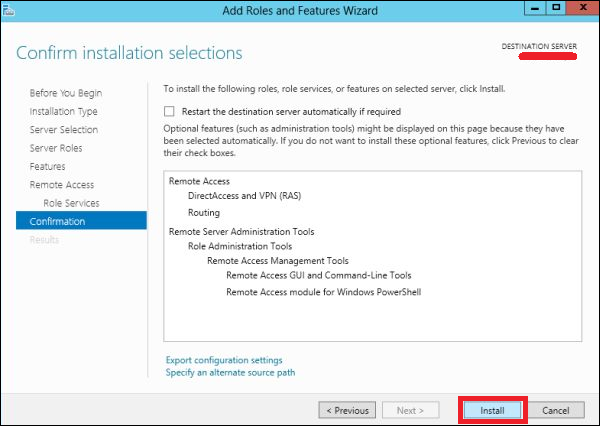
Installed Completely
After the installation is done, let us now see the setup of the router. For this, we need to follow the steps given below.
Step 1 − Go to, Server Manager → Tools → Routing and Remote Access.
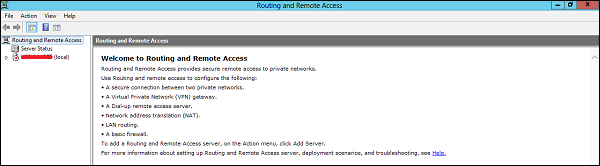
Routing
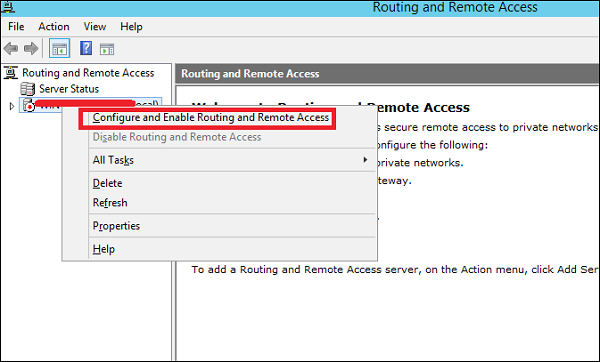
Step 2 − Right click → and then again click on Configure and Enable Routing and Remote Access as shown in the following screenshot.
Enable Routing
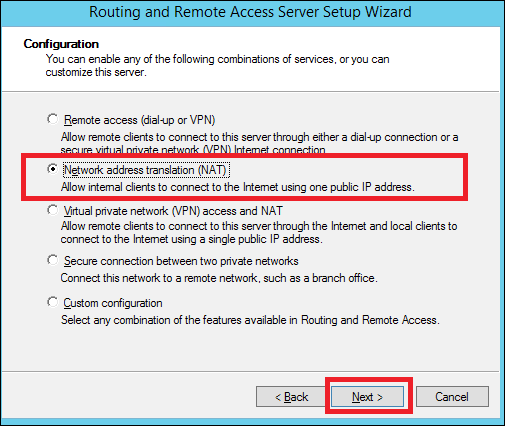
Step 3 − Select the Network address translation (NAT) option → Next.
NAT
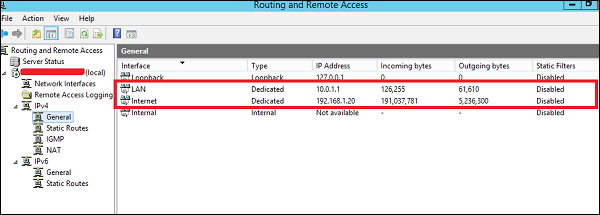
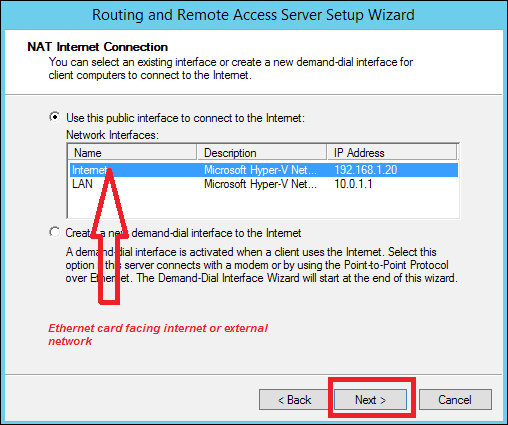
Step 4 − Now choose your Ethernet card that will be facing your internet site as shown in the following image and then → Next.
Ethernet Card
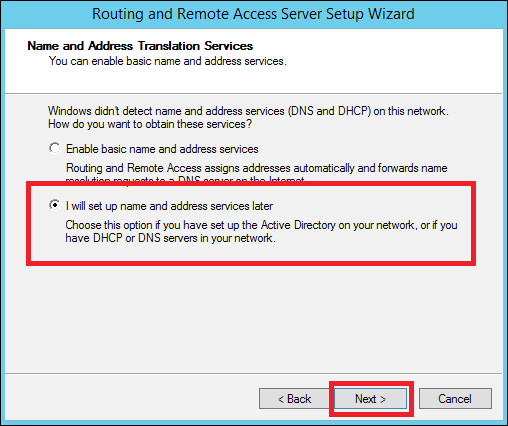
Step 5 − Choose I will set up name and address services later as we have already set up the DHCP and DNS and then → Next.
DHCP DNS
Step 6 − Click the Finish button.
Finished
Now let us see how to make the VPN Setup to allow the employees to connect from home. To do this, we must follow the steps given below.
Step 1 − Go to, Server Manager → Tools → Routing and Remote Access → Right click → and then again click on Configure and Enable Routing and Remote Access → Custom Configuration and then → Next.
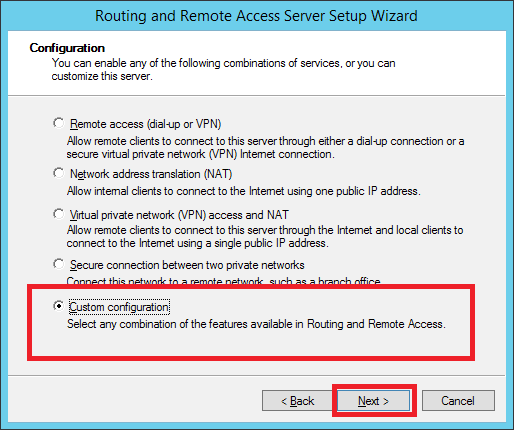
Configure and Enable Routing
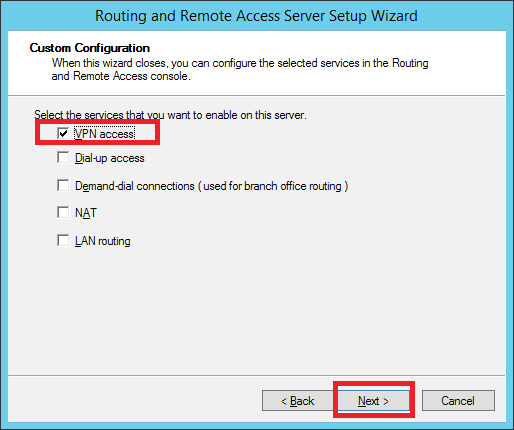
Step 2 − VPN Access and then → Next.
VPN Access
Step 3 − Click the Finish button.

Comments

Popular posts from this blog

Virtualization is one of the most important technology feature and Microsoft has invested on this and the responsible role is called as Hyper-V. Let us now see how to install the Hyper-V Role, for doing this we should follow the steps given below. Step 1  − To Install DNS role go to “Server Manager” → Manage → Add Roles and Features. Step 2  − Click Next. Step 3  − Select the  Role-based  or  feature-based installation  option → click Next. Step 4  − I will install a Local Hyper-V role as it will Select a server from the server pool → Next. Step 5  − From the Roles lists, check the Hyper-V Server role → click Add Features on the popup windows which show up and then → Next. Step 6  − Click Next. Step 7  − Choose your server’s physical network adapters that will take part in the virtualization → Next. Step 8  − Under  Migration , leave the default settings →  Next . Step 9  − Choose the...
The Windows Firewall with Advanced Security is a firewall that runs on the Windows Server 2012 and is turned on by default. The Firewall settings within Windows Server 2012 are managed from within the  Windows Firewall Microsoft Management Console . To set Firewall settings perform the following steps − Step 1  − Click on the Server Manager from the task bar → Click the Tools menu and select Windows Firewall with Advanced Security. Step 2  − To see the current configuration settings by selecting  Windows Firewall Properties  from the MMC. This  allows access to modify the settings  for each of the three firewall profiles, which are –  Domain, Private and Public  and IPsec settings. Step 3  − Applying custom rules, which will include the following two steps − Select either  Inbound Rules  or  Outbound Rules  under  Windows Firewall with Advanced Security  on the left side of the management console...
If we want to add other additional drivers, so that our clients find them easier to install a printer on their own. We must follow the steps given below − Step 1  − Go to, Server Manager → Tools → Print Manager → Action → Add Driver… Step 2  − Check both boxes → Next. Step 3  − Choose the drivers Path to be installed and then → Next. Step 4  − Click the Finish button.